Wednesday 10 September 2003
|
0730
- 0900
Registration
0900 - 1030
Welcoming Address, Welcome to Country Ceremony and Opening
of Conference - More Info >>
1030 - 1100
Coffee Break
1100 - 1230
Plenary Session A "Regulating Privacy: what others are doing" More
Info »
1230 - 1400
Luncheon
1400 - 1530
Plenary Session B "Building Community Trust: a
practical perspective" More
Info »
1530 - 1600
Coffee Break
1600 - 1730
Parallel Sessions
Parallel Session 1
" Privacy Laws: practical effect on global businesses and consumers" More
Info »
Parallel Session 2
" People: organisational structures and incentives to support privacy" More
Info »
Parallel Session 3
" Technology: supporting a culture of privacy in your organisation" More
Info »
1900 - 2330
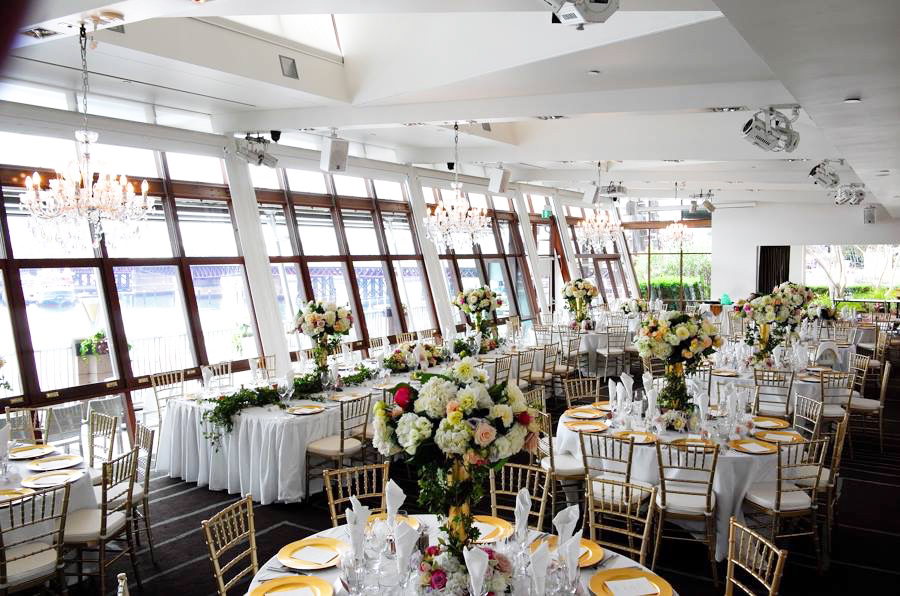
Conference Dinner: The Tumbalong Ballroom (Conference Venue)
|
Thursday 11 September 2003
|
0800
- 0900
Registration
0900 - 1030
Plenary Session C "A Safe and Open Society" More
Info »
1030 - 1100
Coffee Break
1100 - 1230
Parallel Session 4 More
Info »
"Legal Issues: open justice, forgiveness, compassion, context, proportionality”
Parallel Session 5 More
Info »
"Law enforcement with respect"
Parallel Session 6 More
Info »
"A Safe and Open Society: the role of privacy regulators"
1230 - 1400
Luncheon
1400 - 1530
Plenary Session D "Identity and Privacy: who wants
to know and why?" More Info »
1530 - 1600
Coffee Break
1600 - 1730
Parallel Sessions
Parallel Session 7 More
Info » Resources »
"Communicating important privacy information - issues, and
recent initiatives aimed at doing this more effectively"
Parallel Session 8 More
Info »
"Is my privacy the same as your privacy?"
Parallel Session 9 More
Info »
"Identity: now you see it; now you don't"
|
Friday 12 September 2003
|
0900
- 1030
Communicating important privacy information – report
on progress to a resolution by Commissioners
Key Note Address More Info »
1030 - 1100
Coffee Break
1100 - 1230
Plenary Session E "Taking privacy to the people" More
Info »
Closing Address More Info »
Promotion of the 2004 International Conference
1230 - 1730
Closed Session of Data Protection & Privacy Authorities (by
invitation only)
Data Protection & Privacy Authorities only:
1230 - 1400 Luncheon
1400 - 1530 Closed Session
1530 - 1600 Coffee Break
1600 - 1730 Closed Session
|
Members of the Program Committee
The program for the Conference has been drawn up in consultation with
a small, informal international advisory board. The members of the board
were drawn from the corporate sector, privacy advocates and Privacy
and Data Protection Commissioners. We would like to extend our thanks
to those members for their valuable input to the program.
Opening of Conference
Mr Malcolm Crompton, Federal Privacy Commissioner, Australia
Download Malcolm Crompton
Welcome Speech
Prof. Fiona Stanley AC , FAA, FASSA, MSc, MD, FFPHM, FAFPHM, FRACP, FRACOG, Hon DSc,
Australian of the Year, Chief Executive Officer Australian Research
Alliance for Children and Youth,Australia
Fiona
Stanley Presentation (173 Kb Presentation)
Fiona
Stanley Presentation Slides (834 Kb Presentation Slides)
Plenary Session A "Regulating Privacy: what others are doing"
Date Wednesday 10 September 2003
Time 1100 - 1230
Room Tumbalong Auditorium
Chair: Stefano Rodotá, President, Data Protection
Commission, Italy
Speakers:
Mr Raymond Tang, Privacy Commissioner
for Personal Data, Hong Kong
Prof. Allan Fels AO, Dean of the Australia and New Zealand School of
Government
Aims to broaden the view outside our particular privacy perspectives
and also helps to set the scene for the Conference. Includes a survey
of various privacy initiatives around the world, with particular reference
to the Asia-Pacific region. Also looks at the way in which privacy
laws and other laws interact with each other and how these laws may
impact on the roles of all regulators including Privacy Commissioners,
for example, in protecting consumer rights and interests.
Mr
Raymond Tang Speaker Presentation (223 Kb Microsoft
PowerPoint Presentation)
Professor
Allan Fels Speaker Presentation (83 Kb Microsoft
Word Presentation)
Professor
Allan Fels Speaker Presentation (83 Kb PDF
Presentation)
Plenary Session B “Building Community Trust: a practical perspective”
Date
Wednesday 10 September 2003
Time 1400 - 1530
Room Tumbalong Auditorium
Chair: Dr.José Luis Piñar Mañas,Spanish
Data Protection Commission,Spain
Speakers:
Mr Jeroen Terstegge, Legal Counsel Privacy and Data Protection Law,
Philips International, The Netherlands
Mr Michael Mitchell, Chief IT Architect and Planner, Qantas, Australia
Explores the pivotal role of trust in the relationship between customers
and large entities that collect and hold significant sets of personal
data. Takes a look particularly at the practical steps organisations
can take to develop and achieve community trust, the session involves
discussion about organisations' relationships with their communities.
How does investment in this area affect community perception, the trustworthiness
an organisation strives for, and ultimately their place in the market?
Privacy can form a
valuable part of the 'value add' an organisation brings to its products
and services, including the emerging technologies it sponsors, as well
as its finished products. The overall aim being that peoples' personal
information is managed carefully, respectfully, with confidence and
is essential for doing good business!
Mr
Jeroen Terstegge Speaker Presentation (3.68 Mb
Microsoft PowerPoint Presentation)
Mr
Jeroen Terstegge Abstract (35 Kb Microsoft Word
Presentation)
Mr
Michael Mitchell Speaker Presentation (1.18 Mb
Microsoft PowerPoint Presentation)
Parallel Session 1 “Privacy Laws: practical effect on global
businesses and consumers”
Date Wednesday 10 September 2003
Time 1600 - 1730
Room Tumbalong Auditorium
Chair: Mr Reijo Aarnio, Data Protection Ombudsman,
Finland
Speakers:
Mrs Pamela W.S. Chan, Chief Executive of the Hong Kong Consumer Council
Mr John Mendoza, Chief Executive, Australian Sports Drug Agency, Australia
Madame Ariane Mole, Partner Cabinet Alain Bensoussan, France
Increasing globalisation has brought with it new challenges for businesses
in the handling of personal information across borders. This session
looks at the way differing privacy laws between jurisdictions are affecting
the way we do business. We will hear from consumer, business and non
profit perspectives on this topic, with the overall focus on how the
disparity in national privacy laws is being dealt with practically.
We will also explore the impact of these different approaches to data
protection on privacy generally.
Mrs
Pamela W.S. Chan Speaker
Presentation (143 Kb Microsoft PowerPoint Presentation)
Madame
Ariane Mole Speaker
Presentation (616 Kb Microsoft PowerPoint Presentation)
Mr
John Mendoza Speaker
Presentation (8.34 Mb Microsoft PowerPoint Presentation)
Parallel Session 2 “People: organisational
structures and incentives to support privacy”
Date Wednesday 10 September 2003
Time 1600 – 1730
Room Tumbalong Meeting Room 1
Chair: Orson Swindle, Commissioner, Federal Trade Commission, United
States of America
Speakers:
Mr W. Peter Cullen , Chief Privacy
Strategist, Microsoft Corporation formerly Corporate Privacy Officer,
Royal Bank of Canada (RBC) Financial Group, Canada
Ms Anna Fielder, Director, Office for Developed and Transition Economies,
Consumers International, United Kingdom
Ms Barbara Lawler, Chief Privacy Officer, Hewlett Packard, United States
of America
Explores how best practice approaches to handling personal information
can help create an organisational culture of respect for privacy
as an integral part of client service and how pro-active information
privacy practices can positively impact the bottom line. Perspectives
on how well business is integrating privacy management strategies
into meeting consumers' expectations. The emphasis will be on lessons
learnt; what went well; what could have been done differently or
better. Importantly, we will also hear a consumer perspective on
the technology used to support a culture of privacy in different
organisations.
Mr
W. Peter Cullen Speaker Presentation (6.93 Mb Microsoft PowerPoint
Presentation)
Ms
Anna Fielder Speaker Presentation (286 Kb Microsoft PowerPoint
Presentation)
Ms
Barbara Lawler Speaker Presentation (1.81 Mb Microsoft PowerPoint
Presentation)
Parallel Session 3 "Technology: supporting a culture of privacy
in your organisation"
Date Wednesday 10 September 2003
Time 1600 – 1730
Room Tumbalong Meeting Room 2
Chair: Mozelle Thompson, Commissioner, Federal Trade Commission, United
States of America
Speakers:
Dr Brian Richards, Chief Information Officer, Health Insurance Commission,
Australia
Mr Charles Britton, Senior Policy Officer, IT and Communications,
Australian Consumers’ Association, Australia)
Ms Harriet P. Pearson, Vice President, Workforce Effectiveness & Chief
Privacy Officer IBM Corporation, United States of America
Discusses how organisations that collect and hold personal information
make practical use of different technologies to manage personal information,
including the development of stringent policies, procedures and deployment
of technologies (for example authentication/security mechanisms using
cryptography such as PKI). Again, the emphasis will be on lessons learnt;
what went well; what could have been done differently or better. Importantly,
we will also hear a consumer perspective on the technology used to
support a culture of privacy in different organisations.
Dr
Brian Richards Speaker Presentation ( 534 Kb
Microsoft PowerPoint Presentation)
Mr
Charles Britton Speaker Presentation ( 104 Kb Microsoft PowerPoint
Presentation)
Mr
Charles Britton Paper ( 83 Kb Microsoft Word Presentation)
Ms
Harriet P. Pearson Speaker Presentation ( 4.58 Mb Microsoft PowerPoint
Presentation)
Plenary Session C “A Safe and Open Society”
Date Thursday 11 September 2003
Time 0900 – 1030
Room Tumbalong Auditorium
Chair: Michel Gentot, President, Commission Nationale de l’Informatique
et des Libertés, France
Speakers:
The Hon. Nuala O’Connor Kelly, Chief Privacy Officer, Department
of Homeland Security, United States of America
Mr Cédric Laurant, Policy Counsel, Electronic Privacy Information
Center, United States of America
Draws out the new challenges to societies throughout the world raised
by recent security concerns, challenges that have extended to imperatives
for improved identification systems and greater data collection and
analysis. In addressing these concerns, societies will want to consider
how best to maintain the structures, principles and freedoms they hold
dear, such as openness, legal principle, and respect for the dignity
and privacy of individuals. How should governments assess what levels
of privacy and security are appropriate, or demanded by citizens? To
what extent need protecting national security and protecting privacy
be at odds with one another?
Mr
Cédric Laurant Speaker Presentation (301 Kb Microsoft
PowerPoint Presentation)
Parallel Session 4 "Legal Issues: open justice, forgiveness,
compassion, context, proportionality”
Date Thursday 11 September 2003
Time 1100 – 1230
Room Tumbalong Meeting Room 1
Chair: Mr Paul Chadwick, Commissioner, Office of the Victorian Privacy
Commissioner, Australia
Speakers:
Prof. Marcia Neave AO, Law Reform Commissioner, Victorian Law Reform
Commission, Australia
Prof. Dennis Pearce, Emeritus
Professor, Australian National University, former Chairman, Australian
Press Council, Australia
Prof. Iain Currie, University of Witwatersrand, Johannesburg
Discusses whether inherent privacy protection afforded by difficulty
and cost has been lost with the development of readily available and
affordable surveillance equipment, electronic data processing and the
Internet. Such technology is being overwhelmingly embraced by individuals,
public sector and private sector organisations as a way of meeting
obligations of transparency. This session will discuss the availability
and accessibility of certain personal information and asks whether
accountability in decision-making necessarily involve identifying individuals
without limitations. Is it right that our mistakes are on record for
the whole world to see, forever? Are we losing compassion and forgiveness?
The session will also address the issue of regulating access to personal
information and recognising differences in classes of information whilst
achieving proportionality between public interest and privacy interests.
Prof.
Marcia Neave AO Paper (64 Kb Microsoft Word Presentation)
Prof.Dennis
Pearce AO Paper ( 88 Kb Microsoft Word Presentation)
Prof.
Iain Currie Speaker Presentation ( 88 Kb Microsoft PowerPoint Presentation)
Parallel Session 5 “Law enforcement with respect”
Date Thursday 11 September 2003
Time 1100 – 1230
Room Tumbalong Meeting Room 2
Chair: Mr Peter Shoyer, Information Commissioner,
Office of the Information Commissioner of the Northern Territory, Australia
Speakers:
Christine
Page-Hanify, BSc FAICD Senior Business Consultant, Teradata, a Division
of NCR, Australia
Mr Cameron Murphy, President, NSW
Council for Civil Liberties, Australia
Ms Florence Audubert, Attachée
Juridique, Interpol, France
Download
Annual report 2002 CCF-Conference Website (360Kb)
Discusses achieving law enforcement without inappropriate compromise
of individual privacy and achieving the balance where this is not possible.
The speakers come from diverse backgrounds, including law enforcement,
business and a consumer/individual representative. Such a combination
will also draw out what is and what is not working in terms of law
enforcement and protecting individual privacy.
Ms
Christine Page-Hanify Speaker Presentation ( 2.11 Mb Microsoft PowerPoint
Presentation)
Ms
Florence Audubert Speaker Presentation (41Kb Microsoft Word Presentation)
Ms
Florence Audubert Speaker Presentation (18 Kb PDF Presentation)
Parallel Session 6 "A Safe and Open Society: the role of privacy
regulators"
Date Thursday 11 September 2003
Time 1100 - 1230
Room Tumbalong Auditorium
Chair: Mr Paul Thomas, President Commission de la
protection de la vie privée, Belgium
Speakers:
Mr Joseph Meade, Data Protection Commissioner,
Ireland
Prof. Graham Greenleaf, University
of New South Wales, Australia
Chief Jeff Tunks, Deputy Director, NSW Police, Legal
Services
Develops ideas introduced in Plenary Session C on a 'Safe and Open
Society'. Will provide insight into the privacy regulator's contribution
to our modern environment. Each speaker will offer their unique perspective
about the practical implications of privacy regulation on the everyday
experiences of individuals. This session will identify the ways that
privacy regulators enhance the secure and accountable society. It will
also consider how privacy regulators work in conjunction
with law enforcement agencies in achieving a society that is both safe
and open. Professor Graham Greenleaf's presentation will include feedback
from a session at the 'Surveillance
and Privacy in 2003' conference titled 'Privacy Commissioners after
30 years - A critical reassessment.
Prof.
Graham Greenleaf Speaker Presentation (540Kb
Microsoft PowerPoint Presentation)
Mr
Joseph Meade Speaker Presentation (112Kb Microsoft
PowerPoint Presentation)
Mr
Jeff Tunks Speaker Presentation (37.5 Kb Microsoft PowerPoint Presentation)
Plenary Session D “Identity and Privacy: who wants to know and
why?”
Date Thursday 11 September 2003
Time 1400 - 1530
Room Tumbalong Auditorium
Chair: Dr. Hyu-Bong Chung, Secretary-General, Personal Information
Dispute Mediation Committee, Korea Information Security Agency
Speakers:
Ms Carol Coye Benson, Partner, Glenbrook Partners, United States of
America
Mr Tim Dixon, Consultant, Baker & McKenzie, Australia
Ms Jennie Granger, Second Commissioner, Australian Taxation Office,
Australia
Explores the trend towards greater identification, canvassing the
business, consumer/citizen and government imperatives. Businesses,
governments and to a lesser extent consumers, seek effective identification
systems. The session is intended to recognise the potential tensions
between privacy and identification and look at how identification might
be managed in a more privacy protective way or even improve privacy.
The session will discuss the need to develop models of identification
that meet all the objectives, but especially allowing individuals to
retain some control over the personal information.
Ms
Carol Coye Benson Speaker Presentation (826 Kb Microsoft PowerPoint
Presentation)
Mr
Tim Dixon Speaker Presentation (3.74 Mb Microsoft PowerPoint Presentation)
Ms Jennie Granger Speaker Presentation (132Kb Microsoft PowerPoint
Presentation)
Parallel Session 7 "Communicating important
privacy information - issues, and recent initiatives aimed at doing
this more effectively"
Date Thursday 11 September 2003
Time 1600 - 1730
Room Tumbalong Meeting Room 1
Chair: Dr Alexander Dix, Data Protection and Access
to Information Commission, Brandenburg, Germany
Speakers:
Mr.Marty Abrams, Hunton & Williams,
United States of America
Mr.Rigo Wenning, W3C/ERCIM, France
Ms.Dale Skivington, Eastman Kodak Company,
United States of America
Cédric Laurant, Electronic Privacy Information Center, United
States of AmericaTBA
Discusses in a workshop format issues relating to the effectiveness
of privacy notices and canvasses the work of privacy and data protection
commissioners, regulators and others to improve the communication of
privacy information in a global context. Many jurisdictions require
agencies and organisations to provide detailed privacy notices to consumers
but questions are often asked about how effectively they communicate
to consumers. For example, the European Commission Directive 95/46/EC
requires detailed notice and so does key legislation in the United
States (for example, HIPPA and GLB legislation). In Australia, the
introduction of private sector legislation has resulted in organisations
producing lengthy and often incomprehensible notices which it seems
few people may read or understand. This suspicion is supported by a
range of research, including that recently conducted by the Annenberg
Public Policy Centre at the University of Pennsylvania, which showed
that 57% of respondents thought that the presence of a privacy policy
on a website meant that it would not share their personal information.
Eighty-six per cent of respondents agreed that standardising privacy
policy formats would help protect personal information.
A resolution about this issue is being proposed to the closed session
of Data Protection and Privacy Commissioners on Friday afternoon. There
is more information about the resolution and also about recent research
and initiatives in this area on the privacy
notice resolution resources page of this conference website.
Mr
Marty Abrams Speaker Presentation ( 485 Kb Microsoft PowerPoint
Presentation)
Mr
Rigo Wenning (28 Kb Microsoft WordPresentation)
Ms
Dale Skivington Speaker Presentation ( 164 Kb Microsoft PowerPoint
Presentation)
Mr
Cedric Laurant Speaker Presentation (24Kb Microsoft Word Presentation)
Parallel Session 8 "Is my privacy the same as your privacy?"
Date Thursday 11 September 2003
Time 1600 - 1730
Room Tumbalong Meeting Room 2
Chair: Stephen Lau, Chairman, EDS Hong Kong
Speakers:
Ms Dawn Casey, Director, National Museum of Australia, Australia
Prof. David Weisbrot, President, Australian Law Reform Commission,
Australia
Ms Sally Sinclair, Chief Executive
Officer, National Employment Services Association, Australia
In societies with liberal democratic values, generally speaking, the
role of privacy regulation has been to protect the privacy of the individual.
As we commence the 21st century, there is increasing recognition of
alternative views about the importance of the individual in society.
Significantly different cultural and societal values command acknowledgment
in those same societies. The 'New Genetics' compel a searching assessment
of the information contained in the smallest bodily sample. This Session
will canvass these issues and explore how the practical questions of
appropriate privacy regulation might be resolved.
Ms
Dawn Casey Paper (53Kb Microsoft Word Presenation)
Prof.
David Weisbrot Speaker Presentation ( 1.85 Mb Microsoft PowerPoint
Presentation)
Ms
Sally Sinclair Speaker Presentation ( 344 Kb Microsoft PowerPoint
Presentation)
Parallel Session 9 "Identity: now
you see it; now you don't"
Date Thursday 11 September 2003
Time 1600 - 1730
Room Tumbalong Auditorium
Chair: Chair: Sigrún Johannesdottir, Privacy
and Data Protection Authority, Iceland
Speakers:
Mr Ken Anderson, Director of Legal Services, Information and Privacy
Commissioner of Ontario, Canada
Dr John Joseph Borking, Director of Borking Consultancy, The Netherlands
Mr John Grimes, Director, Strategic Development, Argus Solutions, Australia
Discusses how identification and authentication can be achieved without
invading privacy. Find out how people around the world are trying to
achieve this. It will cover how the principles of privacy enhancing
technology can be applied, recent work towards criteria for privacy
testing and evaluation, and the insights and challenges faced by a
biometric application in attempting to address privacy. Over the last
couple of years general interest in identifying and authenticating
people's identity has grown. Technological developments such as biometric
technologies offer the means to do this.
Mr Ken Anderson Speaker Presentation (4.17 Mb Microsoft PowerPoint
Presentation)
Dr John Joseph Borking Speaker Presentation (439 Kb Microsoft PowerPoint
Presentation)
Dr John Joseph Borking Paper (822Kb Microsoft Word Presentation)
Mr John Grimes Speaker Presentation (8.81 Mb Microsoft PowerPoint
Presentation)
Communicating important privacy
information – report
on progress to a resolution by Commissioners
Chair: Mr Malcolm Crompton, Office of the Federal Privacy Commissioner,
Australia
Key Note Address
Date Friday 12 September 2003
Time 0930 - 1030
Room Tumbalong Auditorium
Chair: Mr Malcolm Crompton, Commissioner, Office of the Federal Privacy
Commissioner, Australia
Speakers: The Hon Daryl
Williams AM QC MP, Commonwealth
Attorney-General, Australia
Mr
Malcolm Crompton Key Note Address (322 Kb Microsoft PowerPoint Presentation)
The
Hon Daryl Williams AM QC MP Speaker Presentation (80 Kb Microsoft
Word Presentation)
The
Hon Daryl Williams AM QC MP Speaker Presentation (156 Kb PDF Presentation)
Plenary Session E “Taking privacy to the people”
Date Friday 12 September 2003
Time 1100 - 1150
Room Tumbalong Auditorium
Chair: Mrs Pamela W.S. Chan, Chief Executive of
the Hong Kong Consumer Council
Speakers: Mr Richard
Thomas, Information Commissioner,
United Kingdom
Invites the Conference to consider one of the most challenging and
vital tasks in privacy regulation, getting the privacy message out
to the individual. In keeping with the practical and inclusive theme
of the Conference, the closing session aims to set out some of the
challenges faced by regulators in meeting peoples' privacy concerns
- with particular reference to the United Kingdom experience - and
to address and explore ways of getting key privacy messages 'out there'.
Mr
Richard Thomas Speaker Presentation (1.97 Mb Microsoft PowerPoint
Presentation)
Closing Address
Date Friday 12 September 2003
Time 1150 - 1220
Room Tumbalong Auditorium
Chair: Mrs Pamela W.S.
Chan, Chief Executive of the
Hong Kong Consumer Council
Speakers: Mr Peter
Hustinx,
Chairman, Dutch Data Protection Authority, The Netherlands
The Conference in review. What practical privacy lessons can public
and private sector organisations take away with them? What are
the key messages for data protection commissioners? What might
the future
hold for the privacy protection of the individual?